Guide
5 min read · AuriOliya
Sunflower oil vs. soybean oil: a buyer’s comparison
Both are high-volume commodity oils, but they behave differently in the fryer, on the shelf and on your cost sheet. Here is how sunflower and soybean oil compare for B2B buyers.
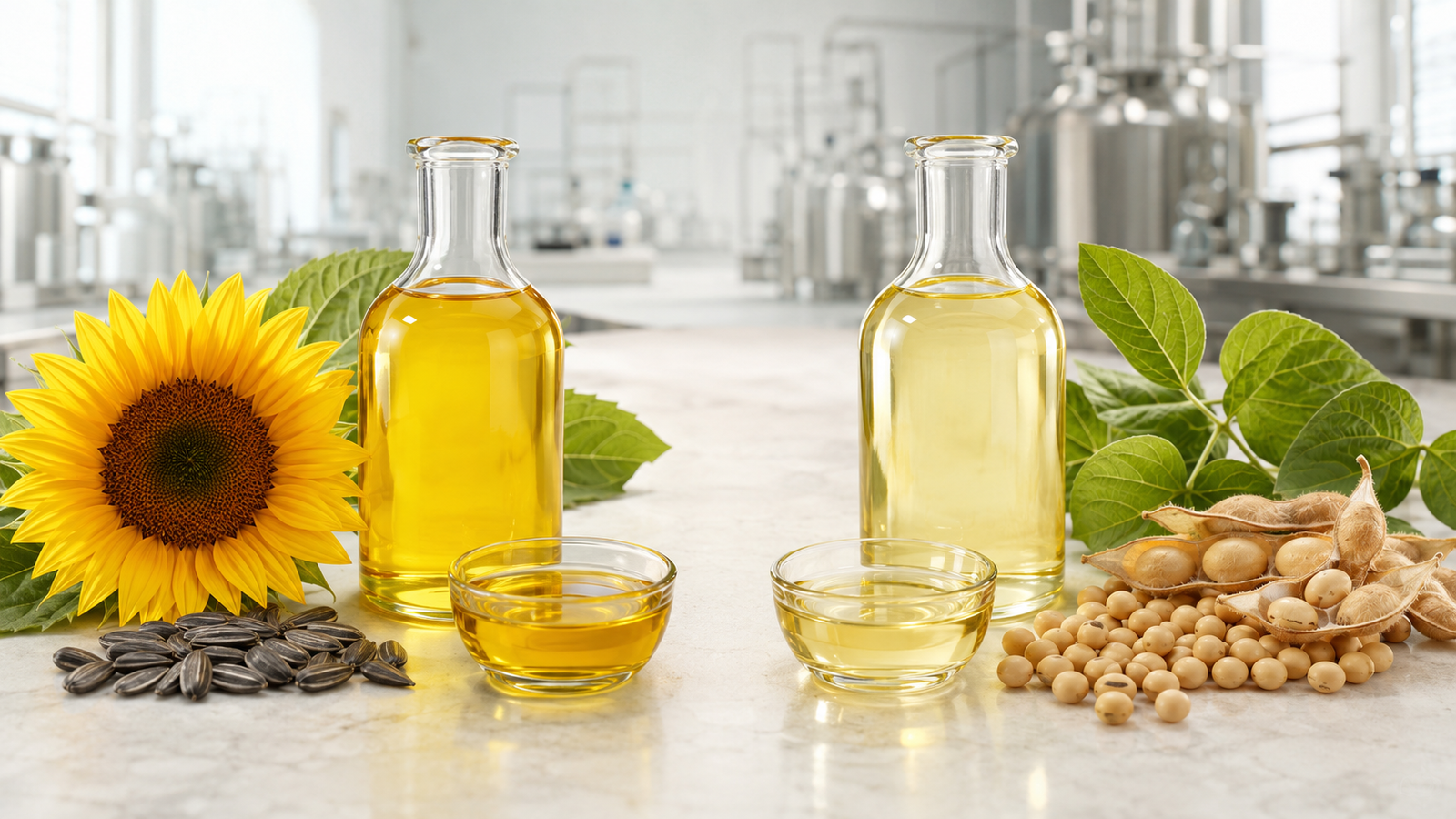
Price & availability
Both trade as global commodities with prices that move on harvest and freight. Sunflower oil is the dominant edible oil out of the Black Sea region, giving European and MENA importers short, reliable supply lines.
Oxidative stability & fry life
Standard sunflower oil is higher in linoleic acid, while high-oleic sunflower oil offers excellent oxidative stability and a longer fry life than soybean oil — valuable for industrial frying and clean-label products.
Flavour, colour & clean label
Refined sunflower oil is prized for its neutral taste and pale colour. It carries no GMO association in most markets, which simplifies clean-label and non-GMO claims compared with soybean oil.
| Attribute | Sunflower oil | Soybean oil |
|---|---|---|
| Typical use | Frying, retail, food mfg | Food mfg, blends |
| Oxidative stability | High (esp. high-oleic) | Moderate |
| Flavour | Neutral | Neutral, can revert |
| Non-GMO availability | Widely available | Less common |
| Black Sea supply | Strong | Limited |
Which should you choose?
For frying performance, clean-label positioning and dependable Black Sea supply, sunflower oil — particularly high-oleic — is the stronger choice for most retail and food-service programmes. Soybean oil remains competitive as a low-cost ingredient oil in blended formulations.
Sourcing sunflower oil?
Get a firm quotation for your grade, volume and destination.
Independent standards and guidance relevant to this page: